
Begonia Care
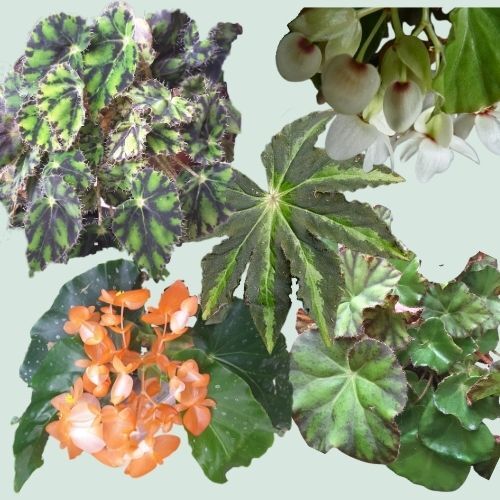
.
Begonia Care & Propagation
Getting your begonias to grow is relatively straightforward.
As I’ve said before, my way isn't the only way; you have to figure out what works best for your environment. Here is how I handle them in my nursery.
Soil and Environment.
I grow my Begonias in free-draining soil from day one. Most varieties thrive when they have moist soil, indirect light, and a bit of humidity.
Propagation Tips
-
Single Leaves: If I am propagating from a single leaf, I tend to plant them quite deep or reduce the stalk's length so the leaf is near or touching the soil. It can be frustrating when they send out plantlets from the top of the leaf, as they often suffer there. A long stalk can also snap under the weight of new growth.
-
Cuttings: For standard cuttings, I ensure the node is buried in the soil. The plantlet will emerge in time.
-
Thick Stem Cuttings: For types like Begonia carolineifolia (a rhizomatous variety), I cut them into segments and leave them to callus before potting up. I then pin them down, barely covered in soil. Because these store water in their stems, it’s vital not to overwater them.
Health and Humidity.
While Begonias love humidity, some—especially the Rex varieties—can be susceptible to powdery mildew. Keep an eye on airflow to help prevent this.
The Three Main Categories.
Roughly speaking, Begonias fall into these groups:
-
Fibrous-rooted: Includes Wax begonias, Cane-like (Angel Wings), Shrub, Trailing, and Thick-stemmed varieties.
-
Rhizomatous: Includes Rex, carolineifolia, bowerae, cleopatrae, manicata, masoniana, prismatocarpa, and versicolor.
-
Tuberous: These are usually bought as bulbs near summertime.
-
Note: There are also Semi-tuberous types, like Begonia dregei, which feature swollen stems (caudex).
-
Posted: Friday 16 January 2026
| Top |