
Rhipsalidopsis and Schlumbergera Care
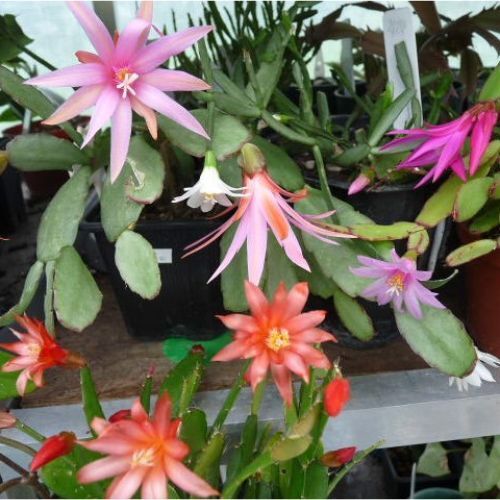
Rhipsalidopsis & Schlumbergera Care & Propagation
While they go by many names—Christmas Cactus, Thanksgiving Cactus, or Easter Cactus—these are all forest-dwelling epiphytes. They are not your typical desert cacti and prefer a bit of humidity and filtered light.
Propagation Methods
There are numerous ways to propagate these cuttings. Depending on your preference and the variety, you can choose the method that suits you best:
-
The Direct Soil Method Some varieties are incredibly vigorous. For these, simply placing the cuttings directly into a free-draining, slightly damp potting mix works perfectly. Ensure they are in a warm spot with indirect light.
-
The Water Start Method An alternative way to keep an eye on root development is to use a jar with just a tiny amount of water—about 0.5 cm. Rest the dry ends of the cuttings into this shallow water. Watch them closely and transplant them into soil once the roots are established.
-
The Humidity Bag Method Place your cuttings into a plastic seal-lock bag that is just slightly damp. This creates a mini-greenhouse environment. Once you see roots beginning to form, they are ready for a pot.
General Care
-
Light: Like the Epiphyllums, these love morning sun or bright, dappled light. Avoid harsh afternoon sun which can "bleach" or burn the segments.
-
Watering: Keep the soil slightly moist but never waterlogged. They enjoy a bit more water than a desert cactus but still need excellent drainage to prevent root rot.
Posted: Friday 16 January 2026
| Top |